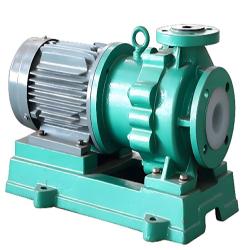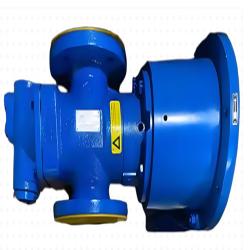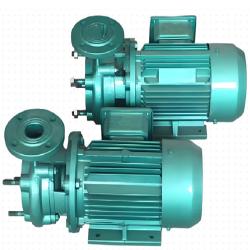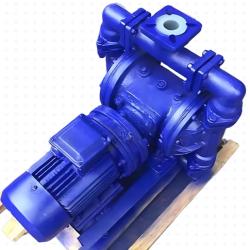


Magnetic drive centrifugal electric pump
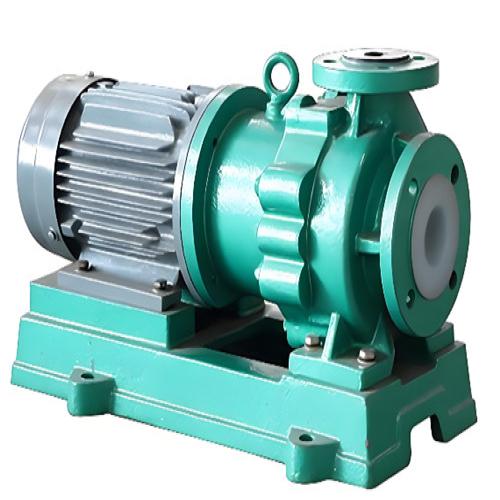
- Model Number: CQB80-65-160F
- Brand Name: kenshine-pump
- Place of Origin: Shanghai, China
- Minimum Order Quantity: 1
- Supply Capacity: 600sets per month/month
- Payment: T/T in advance
- MemberShip: Free Member
- Inquiry Now
CQB80-65-160F Magnetic drive centrifugal electric pump Description
The core difference between magnetic pumps and centrifugal pumps lies in their
sealing structure and transmission method: magnetic pumps utilize a magnetic
coupling transmission without shaft seals to achieve zero leakage, while
traditional centrifugal pumps adopt mechanical shaft seals and direct coupling,
posing a risk of leakage.
Working Principles and Structural Differences
Sealed Design: Centrifugal pumps typically feature mechanical shaft seals or
packing seals, relying on the friction between the moving ring and stationary ring
for sealing, which may lead to medium leakage over prolonged use. Magnetic pumps
employ a shaftless seal structure, fully isolating the internal magnetic rotor from
the medium via an isolation sleeve, retaining only static sealing to eliminate
leakage at its root.
Power Transmission: The centrifugal pump is directly driven by the motor through a
coupling to rotate the pump shaft. The magnetic drive pump indirectly transmits
torque via the magnetic field coupling of the inner and outer magnetic rotors, with
no physical contact between the motor shaft and the pump shaft.
Performance Efficiency and Medium Constraints
Transmission Efficiency: Due to eddy current losses generated by the magnetic
isolation sleeve in the magnetic field, the overall efficiency of magnetic pumps is
typically 10% to 20% lower than that of conventional centrifugal pumps.
Medium requirements: Centrifugal pumps have a wide range of applications, and some
structural designs can handle liquids containing solid particles. Magnetic pumps
rely on the transported medium for lubrication and cooling, and it is strictly
prohibited to transport materials containing impurity particles, as this can easily
cause wear on the isolation sleeve and lead to damage.
Scenario Selection
Magnetic Pump: Suitable for conveying toxic, highly corrosive, flammable, or
explosion-prone media, as well as media requiring extremely high cleanliness
standards, such as in the chemical and pharmaceutical industries.
Centrifugal Pump: Suitable for clean water, circulating water, and low-viscosity
general liquids, prioritizing transmission efficiency and cost-effectiveness in
common scenarios.
Conceptual Supplement: Strictly speaking, magnetic pumps can also be classified
into magnetic centrifugal pumps and magnetic volumetric pumps based on the impeller
principle. Most magnetic pumps on the market actually feature centrifugal
impellers, but the term "centrifugal pump" typically refers to mechanically sealed
centrifugal pumps in comparative contexts.
| flow rate | 0-200m3/h |
|---|---|
| head | 80m |
| pump material | stainless steel, polypropylene, fluoroplastic lining etc |
| chemical pump | industrial pump |
| magnetic pump | centrifugal pump |
| transfer pump | circulating pump |
| dosing pump | corrosion resistant pump |
| china pump | kenshine-pump |
Retaled category: Magnetic Drive Pump
Hot search: magnetic pump, chemical pump, industrial pump, transfer pump, circulation pump, dosing pump